06 August, 2024
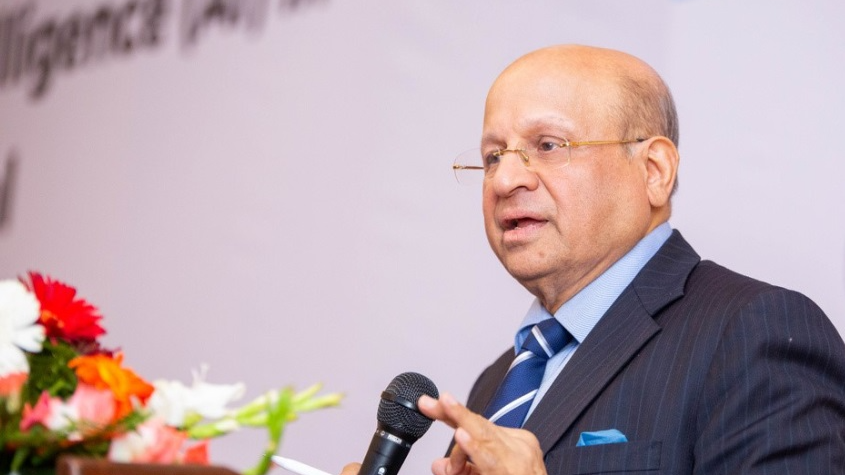
Dr. Bindu Lohani is a former Vice President of the Asian Development Bank (ADB), who holds significant knowledge of the dynamics of sustainable development and climate change. Lohani played a remarkable role in sensitizing issues regarding sustainable development and the impact of climate change for 30 years of service in the ADB. Before joining the ADB, Lohani, served as a government official. An elected member of the National Academy of Engineering of the United States, he has worked with many academic and research institutions at home and abroad. As the world is gearing up to promote green investment given the deepening impact of climate change, Bhim Gautam, editor of Nepal Infrastructure, had a brief conversation with him focusing on green infrastructure and economy:
There have been more debates and discussions about the development of green infrastructure around the world. How significant are these deliberations?
The world has observed climate change as the most pressing issue. It has inflicted a negative impact not only on a single region, country, and individual but on the whole world. No area remains untouched by the climate phenomenon. Nepal is among the countries which are at the frontline of climate change impact. The snow peaks in our mighty Himalayas are also melting. This has directly affected snow-fed river flows making the downstream population more vulnerable to its impact. Due to changes in climate patterns and temperature changes, agriculture is hugely affected, and hydropower projects are likely to face water shortages in future. Scholars from different countries have been conducting various research on this crucial topic. These studies have estimated that climate change will have an impact of 1.5 to 2 percent of the gross domestic product (GDP) of Nepal. The focus areas of these studies were agriculture, hydropower, and water resources sectors of Nepal. In 2017, it was found that the GDP had been affected by up to 3 percent, because of climate change. If we were to conduct a study today, the amount of such an effect would be even higher. If we are to project the impact after a hundred years, it is certain that there will be a host of other bigger problems including economic and human displacement. Since climate change has emerged as a global pain point, there is an urgent necessity of collective efforts globally. Although the Paris Agreement was signed in 2015, its implementation in many countries has been weak. The ‘COP-26’ held in Glasgow, the UK in October 2021, has further emphasized the need to sincerely deal with the growing problem of climate change and effectively implement the Paris Agreement.
Nepal has also committed to zero carbon emission by the year 2045 at COP 26 in Glasgow. How easy is it for Nepal to fulfill the pledge?
With the current pace and efforts, it looks challenging to meet our commitments. Just take example of air pollution in Kathmandu, which is one of the most polluted cities in Asia. Studies state that our GDP has declined by 1 to 2 percent due to excessive traffic congestion, air pollution and its socio-economic effects. Air pollution has led to increase in lung diseases, thereby increasing the expenditure on treatment. Across sectors, such environmental issues pertain. That is why, we should promote development of green infrastructure to tackle such problems.
How significant are green infrastructure projects?
Every infrastructure project we build must be climate and environment friendly. Many years ago, we worked hard to implement the concept of Environmental Impact Assessment (EIA) in Nepal. Such documents are instrumental to make our development projects environment friendly and ensure minimum impact on the environment.
Whatever infrastructure we build, we should focus on the impact of climate change. We have been operating transport and building roads in traditional fashion. Now it should be done in a ‘low-carbon’ way. Of course, building such infrastructure will incur additional fees and expenses. Although it may seem expensive at the beginning, it is sustainable in the long run. Therefore, during project preparation, if we take into account the national climate policy, climate impact, and risk accounting systems, it will help to make the projects environmentally friendly.
How can people benefit from green infrastructure?
We need to create green infrastructure to ensure their long-term sustainability and security. For instance, we all know, glaciers in Nepal are melting more than ever before. So, building resilient and tall bridges around the rivers is a must. Therefore, embracing a longer-term vision in the planning & designing of infrastructures is crucial, especially in the areas prone to natural disasters. Similarly, we should be mindful of our carbon emissions across initiatives, the objective should be to reduce emissions and facilitate carbon trade for financial benefits. By taking our country towards a green economy, it will become a win-win situation for all parties.
It is said that Nepal’s economy cannot afford green infrastructure because it is expensive. Is this a situation?
The problem is, we are unable to adequately tap in the avenues of global and regional climate finance. For instance, every year, more than USD 100 Billion has been collected for the Global Climate Fund. We are not able to capitalize such unds. There are many opportunities where we can attract such international funds, for example by introducing programs like low carbon pricing, issuing green bonds, etc. We must quit the misconception that we cannot do it, rather we should focus on our strengths and show commitment to deliver.
Where is the gap in our country to go towards green infrastructure?
Our government lacks clear strategic plan to move towards a green economy. Therefore, we hesitate to explore ambitious projects like electrifying public transportation in the Kathmandu valley. Most of the countries in the world have done it. For instance, in the Chinese city of Shenzhen, more than 16,000 public buses and 17,000 taxis are running on electricity. If our government shows similar commitment, we can follow such examples. The current problem is that we do not have such commitment and vision. In other countries, regular studies are carried out to evaluate the potential in water supply, electricity, agriculture, transportation, and others, including assessments to explore ways to reduce carbon emissions in various sectors. However, such studies are either not conducted or the results of the assessments are not considered for bringing necessary policy actions. Hence, there is a huge gap in policies and their implementation in our country.
The government has been announcing various programs regarding climatefriendly development projects in the budget speech for a long time. Are Nepal’s infrastructures becoming climate-friendly?
Although the budget aims to build climate friendly infrastructure, it is not seen in practice. Similarly, the government’s announcement for Green, Resilient, Inclusive Development (GRID) is a good intentioned effort. However, specific and targeted actions are yet to be taken. The conflict between development and the environment is seen in Nepal from time to time. There is also a debate about whether the environment comes first or infrastructure.
How do you see the balance between the two?
This is a very old debate that gathered heat during the 1970s. Since then, we have been advocating for the concept that environment and development should go hand in hand occurred. In our country, infrastructure is only perceived as cement and rods. There is lack of understanding that infrastructure is not only a physical concept. Though I am not a climate expert, as per my experience EIA is an important tool to manage climate change, if implemented effectively. I have reflected upon this fact on my book as well. However, there are confusions and apprehensions about EIA in Nepal and it is not conducted diligently, unlike in countries like India, the US, Thailand, and others. Here, the relevant authorities do not view EIA as a comprehensive tool which also takes into account the socio-economic and other aspects of a proposed project. Other problem is lack of awareness of our local resources. For instance, there are abundant forests of Sal trees around Kathmandu and other parts of Nepal. However, there is no awareness whether Sal tree is a rare or endangered species. Hence, although policies and programs exist, there is lack of understanding and coherence in our efforts.
Note: This article is from Nepal Infrastructure Summit 2022 Souvenir by Bhim Gautam having a conversation with Dr. Bindu Lohani.